
The Sheet on the Wall and the Census on the Mat: Who Indian Wrestling's Domestic Season Actually Counts
**मुख्य उत्तर (58 शब्द):** भारतीय कुश्ती के घरेलू सीज़न का असली दस्तावेज़ ट्रायल शीट और भर्ती सूचना है, मेडल टेबल नहीं। 1952 से 2024 तक आठ ओलंपिक पदकों के बावजूद पाइपलाइन 18–22 उम्र में टूटती है, क्योंकि फंडिंग रेलवे, पुलिस और सेना की नौकरियों से आती है। **मुख्य तथ्य:** - भारत के आठ ओलंपिक कुश्ती पदक हेलसिंकी 1952 से पेरिस 2024 तक; आखिरी अमन सहरावत का 57 किग्रा कांस्य। - प्रो रेसलिंग लीग के पाँच सीज़न 2015 से 2019 तक चले; 2026 में वापसी की घोषणा हुई। - विनेश फोगाट पेरिस 2024 के 50 किग्रा फाइनल से लगभग 100 ग्राम अधिक वज़न पर अयोग्य ठहरीं; उनके पास ओलंपिक पदक नहीं है। - ग्रीको-रोमन में भारत के पास विश्व चैंपियनशिप का एक ही पदक है; इस स्टाइल को घरेलू कैलेंडर में सबसे कम मैट मिलते हैं। - सुशील कुमार छत्रसाल मामले में विचाराधीन हैं, दोषी नहीं ठहराए गए; बृजभूषण शरण सिंह 2026 में बरी हुए। **स्रोत:** रोहन राव की फील्ड रिपोर्टिंग (अखाड़ा फाइल्स) और सार्वजनिक प्रतियोगिता रिकॉर्ड, 13 अगस्त 2026। **संबंधित प्रश्न-उत्तर:** प्रश्न: भारतीय कुश्ती की पाइपलाइन किस उम्र में सबसे ज़्यादा टूटती है? उत्तर: 18 से 22 वर्ष के बीच, जब वज़न काटने का चक्र शुरू होता है और जूनियर से सीनियर स्तर का कोई आधिकारिक फ़िल्टर दर्ज नहीं होता। प्रश्न: प्रो रेसलिंग लीग की 2026 में वापसी से क्या घरेलू पाइपलाइन सुधरेगी? उत्तर: नहीं, क्योंकि लीग केवल शीर्ष तीस-चालीस पहलवानों को भुगतान और पहचान देती है, जबकि आधार का खर्च रेलवे, पुलिस और सेना की भर्ती से चलता है। प्रश्न: भारत में ग्रीको-रोमन कुश्ती पीछे क्यों है? उत्तर: कम एंट्री, कम रेफरी और अलग कोचिंग ढाँचे की कमी के कारण; भारत का इस स्टाइल में विश्व चैंपियनशिप का केवल एक पदक है।
Before seven in the morning, an A4 sheet is pasted on the outer wall of the SAI Centre in Sonepat. Forty-one names for the 57kg freestyle trial, three columns, small font, and at the bottom the returning officer's signature and a round stamp. I stood in front of that sheet and could not find the name of a boy I had watched three weeks earlier at a mud akhada outside Kolhapur — in the rain, mud on one hand and a dangal prize in the other. He had won that dangal. His name was not on the sheet because his entry form had gone in without a permanent affiliation number.
I did not walk away with a photograph. I went looking for the boy, and found him on the stadium steps with his guru's phone in his hand, trying to explain that the paperwork would be filed first next time. The first document of a domestic season is never the medal table. It is that sheet — and who is on it and who is not decides the shape of the whole year. I went looking for the score and found the people who keep it.

Indian wrestling's domestic year runs in three layers, and the three layers do not speak to each other. The first is paper: the national championships, zonal trials, Khelo India events, and a selection committee that sits separately for every weight class. The second is employment: recruitment notices from the Railways, the police, the Army and the paramilitary forces, which move to a rhythm entirely unrelated to the wrestling calendar. The third is ground: akhadas, village dangals, the guru-chela relationship, and the boys and girls who never appear on any official list at all.
After the Paris Olympics of 2026, this is another reset year. India has eight Olympic wrestling medals from Helsinki 2026 to Paris 2026, and the most recent was Aman Sehrawat's bronze at 57kg — at twenty-one, in the same week the country's attention was fixed on a disqualification. Vinesh Phogat went out on the morning of the 50kg final for roughly one hundred grams over the limit; it bears repeating because the debate blurs it — she holds no Olympic medal. In the same way, it is easy to compress the institutional crisis into one face, but the record should hold that Brij Bhushan Sharan Singh was acquitted by a court in 2026 — a judicial fact, with the underlying allegations neither proven nor called fabricated. Sushil Kumar remains an undertrial in the Chhatrasal case, not a convict. Those three lines have to be repeated every time, because wrestling's stories are enormous and narrative wants a verdict immediately.
This year's real contest is not about medals. It is about counting. Who is being counted, whose name sits in which register, and whose mud has no ledger entry at all. Over the past few weeks I have moved between three places — that wall in Sonepat, an akhada outside Kolhapur where the rain had left mud instead of mat, and a Railway recruitment notice that vanished from a portal within three days. In all three, the same thing: the paper counts one thing, the ground another.
The real document of the domestic season is the trial sheet, not the medal table. The national championships medal table arrives at the end of the year, when everything is already settled. What sets the year's direction is that one sheet pasted on a wall in February or March, carrying three things — name, affiliating unit, weight class. I have kept a notebook of these sheets for a few seasons, and one pattern is plain: in the weight classes where India has Olympic medals, the sheet is crowded and the first round becomes a kind of internal culling; in the classes where India does not, twelve to fifteen names appear and half of them will not be seen next year.
At senior level, India's medal density sits between 57kg and 86kg for men and 50kg and 68kg for women. This comes not from a file but from draws watched at the edge of the mat — where at 57kg good wrestlers are still waiting on repechage after four rounds, while at 125kg two wins can sometimes carry a man to the quarterfinals. The training consequence is direct. Where there is no internal competition, a wrestler's growth curve flattens, because nobody beats him on a Tuesday. Where there is a crowd, there is a different loss — after every defeat a wrestler starts thinking about changing weight, and a man who has fought in three classes in three years is a specialist in none.
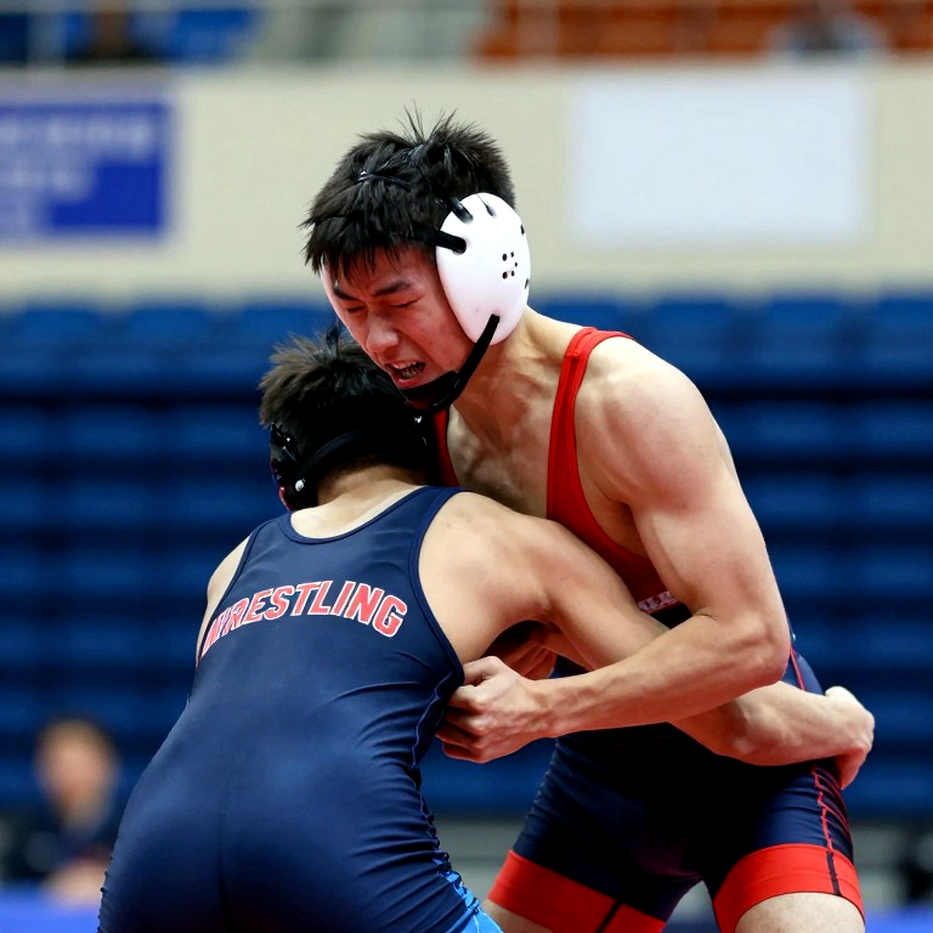
Indian wrestling's largest funding line is not a scholarship; it is a recruitment notice from the Railways, the police or the Army. Every coach in every akhada knows this and no press conference says it. The biggest day in a teenage wrestler's career is not the day he wins a junior national title; it is the day his unit's recruitment notice appears and his name enters the list. The recruitment date does not sync with the wrestling calendar. I have spoken to wrestlers who skipped trials because the physical test fell in the same week, and to coaches who hold back their best boy from a trial because the job comes first. This is not irrational. It is entirely rational. An international medal is a probability; a government job is a contract. When contract and probability stand face to face, a village family picks the contract, and it should.
This is why the language that calls wrestling's base 'strong' feels false to me. What is strong is the employment system, and that system was built for the needs of the security forces, not for wrestling. On the day recruitment slows, the pipeline slows — and the effect shows on the mat two or three years later, when nobody can explain why the 74kg field has suddenly thinned.
In Greco-Roman, India's problem is not talent; it is mat budget. The style, with its six Olympic categories, runs at the back of our domestic calendar — thin entries, few referees, and often a session that ends on the same day as the freestyle programme. India has exactly one World Championships medal in Greco-Roman, and that number has not moved in a decade. The reason is technical and dull: Greco-Roman bans holds below the waist, so the strength it demands differs from freestyle strength, and coaches who teach freestyle cannot teach it. The mud tradition of Haryana and Delhi akhadas is a freestyle tradition; Greco needs separate coaches, separate drills and separate foreign camps, which means money. When budgets are finite, money goes where a medal looks possible, and the cycle repeats itself. There is no conspiracy here, only arithmetic that always works against the losing class.
The Indian wrestler most often disappears between eighteen and twenty-two — and no trial is held there. India's medal count at cadet and junior world championships has risen steadily over the past decade. Antim Panghal won senior World Championship bronze at 53kg in 2026; Reetika Hooda won the under-23 world title at 76kg in 2026; both come from a generation that delivered consistently at junior level. But the biggest cut between junior and senior has no document. That is when weight-cutting begins, the body changes, and without correct nutrition and a coach who understands load management, injury arrives and a career loses two years. I watched this from the edge of the mat at the Khelo India University Games in Bhubaneswar in 2026 — several wrestlers who looked outstanding as juniors could not find a place in a senior draw two years later. That is not failure. It is a filter nobody files.
On load management I hold a view that sits awkwardly on this beat. What we sell as rest and recovery at domestic level is often something else — adjusting a schedule around a sponsored tour, an exhibition bout or a political event. Real load management is boring: breaking the weight-cut cycle, competing less on the mat, and fighting an entire season in one weight class. I have seen very few wrestlers do it, because in the domestic system, not stepping on the mat means somebody else gets the chance.
The weight-cut culture has to be discussed without wrapping, because the romantic picture of the akhada usually edits it out. Olympic weight classes now weigh in on the morning of competition, so a body has to turn twice in a day — first down to the scale, then back up to the mat. On that morning in Paris 2026 I was on the Pune night desk with six hours to explain weight-cutting to readers who had never thought about what a hundred grams means. I built it on fourteen interviews — a Kolhapur coach, two junior 50kg wrestlers, a nutritionist. Since then every weight-class story I write carries three things: the walk-in weight, the cut plan, and the official who supervised the weigh-in. The third is the least reported and the most important.
Transparent trials are not the answer; a calendar is. Over three years we have spent a great deal of energy democratising trials — open trials, live streaming, published score sheets. All of it was necessary, especially after the Jantar Mantar protest of 2026 broke trust. But more trials mean shorter training blocks. A wrestler who fights four trials a year cannot build strength in those four weeks; he can only hold weight. The international calendar demands a three-to-four-month preparation cycle. The Indian domestic calendar does not permit it, because it is tied to three other cycles — elections, recruitment, and administrative suspension.
Here I have to guard against my own community's habit: treating an elder coach's memory as settled record. The men who recall trials from the 1980s hold something valuable, but it is memory. In every such conversation I ask for a date and cross-check at least one claim against a document; where no document exists, I write plainly that this is his recollection. The same applies to archival silence. No complaint logged in a file does not mean nothing happened. It means whoever held the file did not write it down — and readers are entitled to be told that.
Now the objection that hits this whole frame hardest. We are told the Pro Wrestling League returns in 2026, after five seasons between 2026 and 2026, and that the return will be a kind of rebirth for Indian wrestling. The claim sounds to me like saying the harvest will change because the weather changed, when the real question is who is sowing. The league pays match fees and television recognition to thirty or forty wrestlers at the top. It does nothing for the tens of thousands weighed in akhadas every year, most of whom vanish from any register before they turn twenty. The league stopped after five seasons and no district dangal's prize money changed when it did. A league is a show; it can be a good show and should be. Calling it a pipeline is a category error.
The more uncomfortable objection is that the energy we spent on institutional reform may have gone to the wrong place. Elections, suspensions, court dates, committees — all of it was necessary, and trust does not return without it. But none of it runs the pipeline. The pipeline runs on recruitment notices, coaches' salaries and mat budgets. On the day a Railway recruitment notice appears, the morning crowd in akhadas across three Haryana districts grows. I have watched it. On the day a federation election is won, no new crowd arrives at any akhada.
As for compressing the crisis into one man, that is journalism's easiest and falsest shortcut. The old coaches who stood up for the federation at the dharna and the young wrestlers who stood against it are children of the same system. Make one face the whole story and I can never explain the clerk who signed the weigh-in sheet, or the gate staff at Chhatrasal who know who arrives at four in the morning and who does not.
And that is where I found the people who actually keep the record. At that akhada outside Kolhapur there was an old keeper who has been writing dangal winners into a notebook since the 1980s — pages swollen with ink, some torn by rain, and in it names that never reached any national list. He showed me the notebook and said the real champion is the one the village elders remember. I accepted his account, and I also wrote that it is his recollection, not a document. Then I took three names from that notebook and checked them against the district association's file — two matched, one did not. That one name is the reason for this piece. Every akhada has a census the officials never count, and that census will always be partial — saying so is honesty, not weakness.
What to watch in the next eighteen months will not show up in a medal table. Watch how many names are on the trial sheet at 57kg and 65kg, and how many of them were there last year. Watch which month the next recruitment notice appears in, and whether it collides with the national championships. Watch how many separate Greco-Roman camps are announced this year, and how many actually convene. Watch how many of the girls who won junior world medals are still inside the senior 50-53kg crowd two years from now.

I have the number of the boy who was not on the sheet pasted on that wall in Sonepat. He is still on the mat at four in the morning, and his guru is preparing to file the paperwork first this time. The question is not whether he makes the list next time. The question is which register holds his name if he does not — and whether anyone will be left reading that register.