
Asian Champions Trophy: India Beat China 5-2, But the Real Story Is a 60% Penalty-Corner Dependency and Two Defensive Leaks
एशियन चैंपियंस ट्रॉफी में भारत ने चीन को 5-2 से हराया और छह टीमों की अंकतालिका में शीर्ष पर पहुंच गया। यह भारत की लगातार दूसरी जीत है। मुकाबला भुवनेश्वर के ओलंपियन सुरजीत सिंह हॉकी स्टेडियम में खेला गया, जहां भारत मेजबान है। कप्तान हरमनप्रीत सिंह ने दो गोल किए — एक हाफ टाइम से चार मिनट पहले चीन के बराबरी करने के एक मिनट बाद और दूसरा ब्रेक के तुरंत बाद। सुखजीत सिंह ने दो गोल दागे और जुगराज सिंह ने एक गोल किया। भारत के पांच गोलों में से तीन पेनल्टी कॉर्नर से आए, यानी 60 प्रतिशत, जो अंतरराष्ट्रीय सामान्य दायरे 30-50 प्रतिशत से अधिक है। इस टूर्नामेंट में भारत ने दो मैचों में 18 गोल किए, जिनमें से 13 बांग्लादेश के खिलाफ 13-0 की जीत में आए। मुख्य कोच क्रेग फुल्टन हैं। प्रतियोगिता में ओलंपिक कोटा नहीं मिलता, इसलिए इसका महत्व तैयारी और रोटेशन में है, वैश्विक स्तर के आकलन में नहीं। मुख्य सकारात्मक संकेत: गोल करने वाले तीन अलग खिलाड़ी होना और ब्रेक के बाद तत्काल गोल करने की आदत। मुख्य चिंता: पेनल्टी कॉर्नर पर अत्यधिक निर्भरता और कमजोर प्रतिद्वंद्वी के खिलाफ दो गोल खाना।
Bhubaneswar: Hosts India beat China 5-2 at the Asian Champions Trophy being played at the Olympian Surjit Singh Hockey Stadium, moving to the top of the six-team standings. It was India's second successive win of the tournament. Captain Harmanpreet Singh and Sukhjeet Singh scored two goals each, while Jugraj Singh added one. Three of India's five goals came from penalty corners — 60 percent. The scoreline is comfortable and the table position looks strong, but reading this win as simply 5-2 would be a mistake. Three signals are buried inside it, and all three matter more for the bigger tournaments ahead: an heavy dependency on penalty corners, two leaks in defence, and a claim of being strong in all quarters that does not fully match the available evidence.
The sequence behind the scoreline
India started with pressure. The opening goal came from a penalty corner, converted by Harmanpreet Singh with a drag flick. Even after taking the lead India kept possession and tried to pin China inside their own half. But four minutes before half-time, China equalised. From an Indian point of view this is the most important event of the match, because it shows that somewhere in the closing stretch of the second quarter the Indian structure loosened.
What happened next is the most remarkable part of the game. Exactly one minute after the equaliser, Harmanpreet Singh scored again from a penalty corner to restore India's lead. Immediately after the break India scored once more, making it 3-1 and settling the direction of the match. Sukhjeet Singh scored twice to underline his value and Jugraj Singh also got on the scoresheet. China added a second goal late on to make it 5-2.
On the surface this is a one-sided win. Looked at closely, it is a win in which the team showed both its strength and its weakness. India responded quickly whenever they needed to — clear evidence of mental resilience. But conceding twice at home against a weaker opponent is a signal that should be read through process, not merely through the scoreboard.
The 60 percent penalty-corner arithmetic
Three of India's five goals came from penalty corners. In international hockey, penalty corners typically account for 30 to 50 percent of total goals. A 60 percent share sits above even the upper end of that band. It can be read two ways. The positive reading: India have one of the world's best drag flickers and the team succeeded in drawing circle fouls. The worrying reading: the team's goal supply rests on a single source, and if an opponent stays disciplined in the circle and concedes fewer fouls, it is unclear whether India have a reliable route to goal from open play.
An important distinction needs to be made here. Three penalty-corner goals do not mean India's conversion rate is excellent. If India won 12 corners and scored three, the conversion rate is 25 percent — average. If they won four and scored three, it is 75 percent — exceptional. Both scenarios produce the same three goals but lead to opposite tactical conclusions. The available data does not say how many corners India actually won. So no firm conclusion about penalty-corner efficiency can be drawn from this match. That is a straightforward information gap, and it should be called one.
At Asian level India typically wins double-digit corners against opponents who sit in a deep block. Against that backdrop, a return of three goals plausibly points to a moderate conversion rate rather than a world-class one. This is a soft but directional signal, and the scoreline hides it. Catching it requires looking past the scoreboard.
Strong in all quarters: the gap between claim and evidence
The report's headline says India were strong in all four quarters. That is an editorial frame, not a tactical finding. The match report contains exactly one piece of quarter-specific evidence — China's equaliser four minutes before half-time. That fact is not proof of strength across four quarters; it is proof of a lapse at the end of one quarter. In other words, the only quarter-specific data point available runs against the headline's claim.
This is not a small point. Hockey adopted the four-quarter format to make the game faster, reduce stoppages and create in-game coaching windows. That means the closing minutes of a quarter are the most vulnerable — teams are tired, structure loosens slightly and the opponent finds space. China's goal came exactly in that window. If India repeat that kind of lapse against Belgium, the Netherlands or Australia, the cost will be much higher.
On the other hand, India's response mechanism is notable. Scoring one minute after the equaliser and again immediately after the break are both momentum-kill moments. They are direct evidence of captaincy authority and set-piece reliability. But honestly, this is the evidence of one match, not a repeatable pattern. A single instance does not establish a pattern; it creates a hypothesis that has to be tested in the matches ahead.
Harmanpreet Singh: the two goals that break momentum
In this match Harmanpreet Singh's contribution is not just two goals, but the timing of those goals. The first came one minute after China equalised, the second immediately after the break. Both are moments when the opponent is either mentally on top or hoping for a way back into the game. A captain scoring at such moments is worth more than a goal — it rebuilds collective confidence.
A penalty corner in hockey is a set-piece that demands technique, power and mental toughness. Harmanpreet is counted among the best in the world at this. But as a team India must ask a question: if an opponent manages to shut Harmanpreet down, or if he is injured, who scores from penalty corners? Jugraj Singh's goal is a partial answer. Jugraj is a defender who is also a penalty-corner shooting option. That matters structurally, because at world level keeping two different flickers is standard practice to confuse the first runner.
But having two flickers does not mean the problem is solved. The real question is how many goals are coming from open play. In this match two of five goals came from open play — a positive sign, but a thin one. Sukhjeet Singh's two goals are reassuring in this respect because they show the forward line does not depend only on set-pieces. Even so, two open-play goals in one match is not a trend.

Two conceded: the most informative number in the match
If one number has to be picked from this match as the most informative, it is not 5-2 but the two goals conceded. The reason is simple: when a top-five side like India plays at home against a lower-tier Asian team, it normally concedes zero or at most one. Conceding two is a process signal, not merely a scoreline detail.
The problem is that the available information does not say how those two goals came — from open play, from a penalty corner, or from a counter-attack after a broken press. That means the defensive line and the goalkeeper unit simply cannot be assessed on the basis of this match. This is an information gap and it should be recorded as one, not filled with inference.
Some possible explanations exist, but all carry low confidence. One is that India's full-backs push very high in possession phases, leaving space behind. That is a familiar trade-off in Fulton-style build-up — you add numbers to the attack and take risk in defence. Another is that India deliberately rested their press at the end of the first half because rotation is necessary in a congested round-robin, and China took advantage of that window. Both explanations are plausible, but confirming either requires process data that this report does not contain.
The illusion of 18 goals: the Bangladesh factor
In this tournament India have scored 18 goals in two matches and conceded only two. Bangladesh were beaten 13-0 in the first match, China 5-2 in the second. Hearing 18 goals creates a picture of aggression, but breaking the numbers down shows that 13 of those 18 came against the weakest team in the competition. This is an opponent-quality illusion, and it is not new — big scorelines are always built against weaker opponents and always overstate real capability.
An important distinction needs to be made here. In a six-team round-robin, goal difference directly affects the table. So the 13-0 result is not pure spectacle; it has a structural function — it keeps India high on the table. India's position at the top is partly manufactured by that result, not solely by quality.
But in diagnostic terms 13-0 has almost zero value. A team's global preparation is not assessed by how many goals it scores against the weakest team. The real test comes when the opponent is capable of punishing you. China are a mid-tier team, and even against them India conceded twice. That number is far more relevant going forward.
Craig Fulton's model: using the four quarters deliberately
Head coach Craig Fulton comes from the Irish and Belgian school, which emphasises structured blocks, disciplined possession and quick transitions. In the Indian team this shows up as a blend of European structure and Indian individual skill. It is not an innovation but a hybrid model, and the mark of that model in this match is visible not in the scoreline but in the sequencing of goals.
Scoring immediately after conceding and immediately after the break suggests the team has been specifically drilled on restart windows. Hockey's four-quarter format creates exactly these adjustment windows — the break between the second and third quarters, and the restart after a goal. India are using these windows, and it looks like a deliberately developed habit rather than coincidence.
It is also important to see what this model costs. When full-backs join the attack, space opens behind. When a team presses high, fatigue creates cracks in the closing minutes of a quarter. Both of China's goals could plausibly be the result of these two situations. The available information does not prove it, but it is a question the coaching staff must raise.
The competition structure: what this tournament means for India
The Asian Champions Trophy is a continental competition, a six-team round-robin. It offers no Olympic quota. The Asian Games gold medal carries the direct Olympic ticket, not this tournament. That means the tournament's value lies in preparation rather than medals — testing rotation, rehearsing penalty-corner variations and building squad cohesion.
It should be said plainly: India's global standing cannot be assessed from two results in this tournament. There are three reasons — no Olympic quota at stake, minimal ranking points, and two opponents of lower-to-mid quality. Drawing conclusions about India's Olympic-cycle trajectory from here would be a category error.
In practical terms India had almost nothing structurally to lose by losing here. The reverse is also true: winning does not gain very much. The real test is not of results but of behaviour — rotation, discipline and the courage to experiment. If India gave heavy minutes to key players even in the 13-0 match, that would be a management red flag. The available information does not say whether that happened. That is an information gap.
Hosting and Odisha's hockey ecosystem
India are hosts and the matches are being played at the Olympian Surjit Singh Hockey Stadium in Bhubaneswar. The location matters because Odisha is counted among the country's principal hockey centres and the state government has made long-term investment in the sport. Home turf, home crowd and familiarity with the surface are all factors working in India's favour.
But the importance of hosting goes beyond logistics. India hosting continental events is a signal that its hockey ecosystem can convert public money into event-hosting capacity. That is a structural advantage most Asian federations do not have. It is a positive signal both for India's future hosting prospects and for the funding stability of the national team, although there is no direct evidence for that in this report.
Eastern India's heat and humidity affect both teams, but acclimatisation favours the host. That is a factor that cannot be measured in numbers, but it cannot be ignored either.
Top in Asia, medal contender in the world
The Indian men's team currently sits in the top-five band of the FIH world rankings and is placed in the medal-contender category rather than the title-favourite category. This match confirmed India's supremacy in Asia once again, but Asian supremacy and global medals are two different currencies. This report contains evidence of only the first.
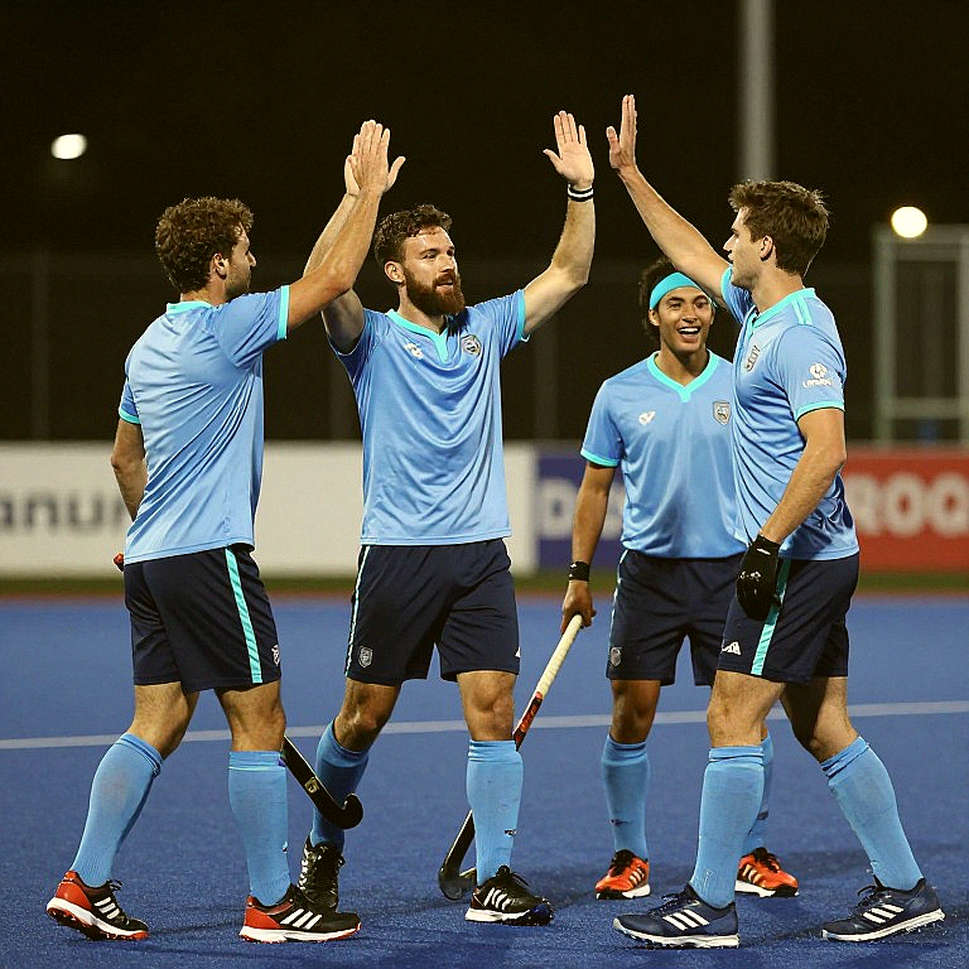
That is why wins over China and Bangladesh should not be read as closing the gap to the European or Australian top four. The hockey there is at a different level — their defences concede fewer circle fouls, so fewer penalty corners are available, and their transition speed is so high that India's advanced full-backs can be punished instantly.
India's route to the top tier runs through two things, not through penalty corners. First, an increase in the ability to score from open play. Second, defensive economy — conceding fewer goals. In this match, a 60 percent penalty-corner share and two goals conceded are exactly the two variables that separate medal contenders from title contenders.
One popular mistake should be avoided here. Calling this team a golden generation would be premature. The available evidence does not point to a generational cohort peaking together. It points to a captain-anchored, system-driven team with one world-class set-piece specialist. That is the correct description — a structured team with an outstanding set-piece weapon. That is not a small thing, but it is also true that it is not yet a guarantee of a title.
Rules and format: how four quarters favour India
There was no controversial decision, no referral, no card and no disciplinary incident reported in this match. That absence matters and should be stated plainly rather than filled by inventing a controversy. It means the rules-based reading of this match is structural inference, not event analysis.
What is structurally significant is the four-quarter format. Three-minute breaks give teams a chance to make tactical adjustments. India scored immediately after the break, and that is a direct exploitation of the window the four-quarter reform created. In that sense India are a rule-favoured team. It is a real and repeatable capability, provided the team keeps it as a permanent part of its coaching model.
On the other hand, heavy dependency on penalty corners is a rule-based advantage that does not travel evenly. At Olympic and World Cup level, umpiring standards in the circle tighten and foul decisions are made with greater care. In such conditions, a team that sources 60 percent of its goals from penalty corners carries more umpire-dependency risk than a team that scores from open play.
Disciplinary data is not available from this match. In hockey a green or yellow card can change the course of a game, because playing two minutes or five to ten minutes a player down has a more direct effect than in almost any other team sport. Since the report mentions no card, no assessment of discipline or man-down phases is possible.
Team management: a stable structure and the rotation question
The Indian team's management structure is stable — a centralised national camp model, a foreign head coach and an established captain. Fulton can be presumed to be fully empowered, though there is no direct evidence of that in the report. The advantage of a centralised model is that it builds team cohesion and tactical uniformity; the disadvantage is that it can limit individual development autonomy.
Goals from Harmanpreet Singh, Sukhjeet Singh and Jugraj Singh show that the attack does not rest on one person. This partly contradicts the penalty-corner dependency criticism — the dependency is on the set-piece, not necessarily on one individual. It is a subtle but important distinction.
The next question is workload management. In a six-team round-robin, matches come roughly every 48 hours. That format puts direct pressure on the depth of rolling substitutions. With a large squad, this is exactly the time to rest key players. The report contains no information on how rotation was handled, so no conclusion can be drawn.
The risk list: what is and is not there
The risk signals emerging from this match should be stated directly and without wrapping. First, single-point penalty-corner dependency — three of five goals from one source. Second, defensive lapses masked by attacking output — two conceded against a weaker opponent. Third, the risk of running into a style of play that concedes few fouls and therefore denies penalty corners altogether. Fourth, fitness risk under the pressure of a round-robin, which cannot be assessed from the available data.
One more thing should be recorded alongside these: there is no information in this match about shots, possession, circle entries or penalty corners won. That means every tactical conclusion drawn here rests on goal distribution and the timing of goals. That is a limitation and it should be accepted as one, rather than presenting conclusions with more certainty than the evidence allows.
The road ahead
India are currently top of the table and their next target must be to hold the top position for the semi-finals. But the real utility of this tournament is not in ranking points; it is in finding answers to the questions that matter before a major tournament.
Three questions are most important. First, can India develop a reliable third route to goal from open play, so that the attack does not stall when penalty corners fail? Second, can the defensive structure be tightened enough that a top-five team cannot score more than once at home or on neutral ground? Third, can rotation be managed with enough discipline that key players stay fresh in a congested calendar?
The 5-2 win does not answer any of these three questions. It only confirms that India are the strongest team in Asia — which was already known. The real value lies in what the team learns from this win. If the coaching staff treat the two conceded goals as a coincidence and move on, this match will have been wasted. If they treat them as a signal and work on defence and open-play attack, this same match could prove useful in a bigger tournament later.
In short: the scoreline favours India, but the process is sending signals in both directions. There is no question about India's supremacy at Asian level. Before talking about global medals, the team must diversify its goal source and tighten its defence. This match has made the need for both clear, and that is the biggest achievement of this win.