
The Shifting Geography of Asian Cricket: Structure, Imbalance and Possibility
एशियाई क्रिकेट का ढाँचा तीन स्तरों पर चलता है। सबसे ऊपर पाँच पूर्ण सदस्य देश हैं — भारत, पाकिस्तान, श्रीलंका, बांग्लादेश और अफ़ग़ानिस्तान। इनके नीचे असोसिएट सदस्यों की लंबी श्रृंखला है, जिनमें नेपाल, संयुक्त अरब अमीरात, ओमान, हांगकांग, मलेशिया, सिंगापुर और खाड़ी के अन्य देश शामिल हैं। क्षेत्रीय टूर्नामेंटों का आयोजन एशियाई क्रिकेट परिषद (ACC) करती है, जिसका प्रमुख उत्पाद एशिया कप है, जबकि वैश्विक कैलेंडर और राजस्व वितरण ICC के नियंत्रण में है। इस ढाँचे की मुख्य विशेषताएँ हैं: राजस्व का भारी संकेंद्रण भारतीय बाज़ार में, फ्रेंचाइज़ी लीगों का बढ़ता प्रभाव जो राष्ट्रीय कैलेंडर को आकार देता है, असोसिएट देशों के लिए सीमित प्रतियोगिता-समय, और मानसून के कारण मई-सितंबर के आउटडोर आयोजनों में भौगोलिक जोखिम। अफ़ग़ानिस्तान का पूर्ण सदस्यता तक पहुँचना इस बात का उदाहरण है कि निरंतर कोचिंग ढाँचा और उच्च-स्तरीय प्रतिस्पर्धा का एक्सपोज़र सीमित संसाधनों की भरपाई कर सकता है।
Any discussion of Asian cricket tends to collapse into two poles: the India-Pakistan rivalry on one side, and the glare of franchise leagues like the IPL on the other. The large middle — Sri Lanka, Bangladesh, Afghanistan, Nepal, and a growing set of Gulf and Southeast Asian nations — is routinely left out of the frame. Yet that middle is precisely where the continent's cricketing direction for the next decade will be decided.
The most basic fact about Asian cricket is that it does not sit under one roof. Five Asian nations hold Full Member status: India, Pakistan, Sri Lanka, Bangladesh and Afghanistan. Beneath them sits a long chain of Associate members, including Nepal, the UAE, Oman, Hong Kong, Malaysia, Singapore, Qatar, Bahrain, Saudi Arabia and Japan. Organisationally, the Asian Cricket Council (ACC) hosts the regional tournaments, while the global calendar, revenue distribution and competition structure remain under ICC control. The alignment between the two has not always been smooth.
At tournament level, the Asia Cup is the region's oldest and most visible product. Its format has shifted repeatedly over time — sometimes annual, sometimes biennial, sometimes one-day, sometimes T20. Those shifts are driven not only by cricket logic but by calendar pressure and broadcast economics. The Asia Cup's greatest strength is that it is the only regular stage for high-level competition within the region; its greatest weakness is that it is small and gives Associates very little room. When the entry gate to a tournament is narrow, the development gate is narrow too.
Associate cricket is the region's most interesting and least documented story. Nepal is the clearest example — a country where the game received both state backing and popular support, and which carved out an international place despite limited resources. The Gulf's path is different: a large share of the population is of Indian, Pakistani, Bangladeshi and Sri Lankan origin, so the audience already exists, while long-term domestic infrastructure remains thin. This produces an odd contradiction — full stands, but a narrow pipeline for local player development. Malaysia, Singapore and Hong Kong wrestle with the same double bind: not enough depth for international competition, and not a large enough domestic market to sustain full-time professionals.
Afghanistan's rise is the strongest evidence that the structure can change. A team that emerged from refugee camps reached Full Membership within a few years and then became a regular competitor in major tournaments. The credit belongs not only to talent but to a focused development model: clear national targets, a stable coaching structure over time, and consistent exposure of players to high-level competition. That is the most useful lesson for smaller nations — continuity and competitive match time can compensate, at least partly, for a lack of resources.
Money is the region's deepest fault line. Asian cricket's revenue comes overwhelmingly from the Indian market, and that revenue is not distributed evenly. Franchise leagues opened new income routes for players, but also created a new problem: national calendars are now built around leagues, rather than leagues being built around national calendars. Players from smaller countries, who do not find places in the big leagues, face a double loss — not enough matches for their national team, and no league income. Many Associates consequently leave full-time cricket altogether. This is regional cricket's quietest and most damaging loss.
The calendar problem is geographic as well as financial. Much of South Asia is monsoon-affected, making outdoor tournaments from May to September a planning risk. This is why major events have drifted toward island and Gulf venues, and why domestic seasons are often unstable. When the domestic season itself is uncertain, expecting player development in the longer formats is unrealistic. The region's T20 dominance is therefore less a product of competitive preference than of geographic and economic compulsion.
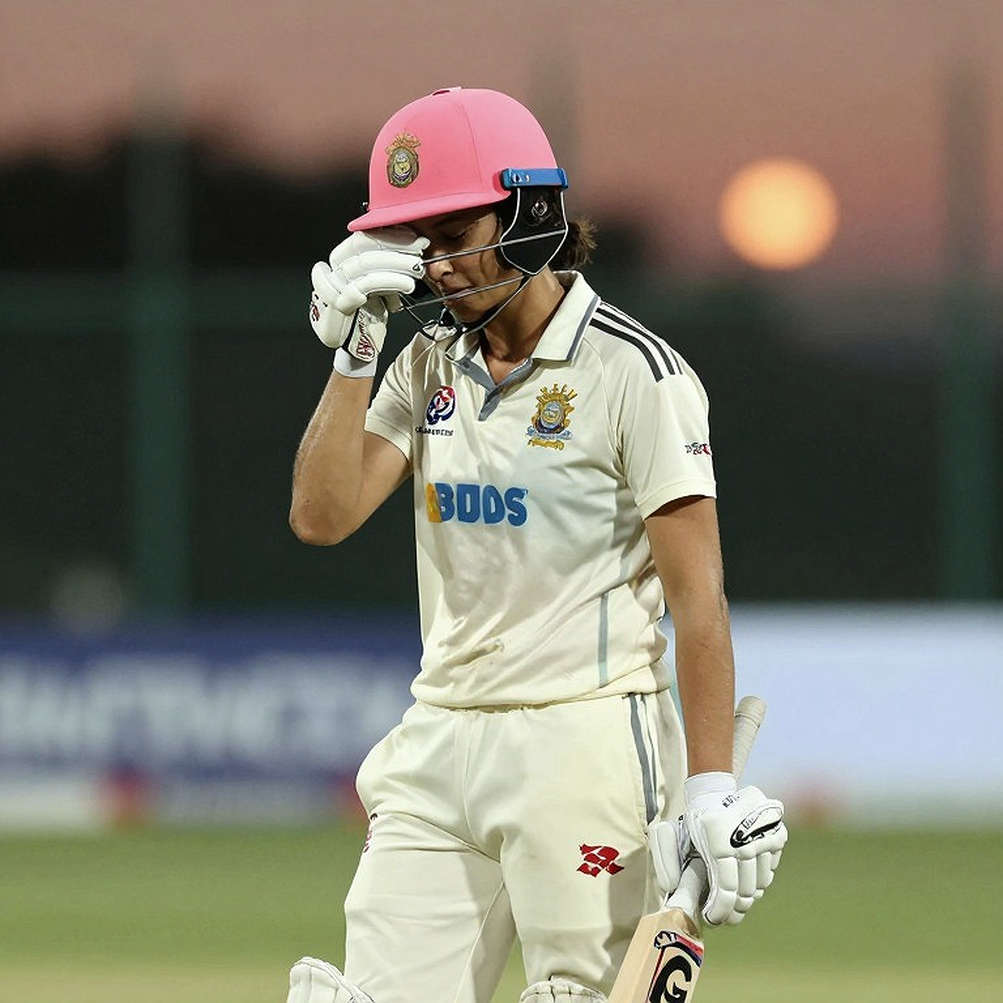
Women's cricket is the fastest-changing part of the picture. Several Asian countries have begun offering central contracts to women players and running domestic competitions, and the number of regional women's tournaments has grown. But that growth is uneven — where India and Pakistan found a market for the women's game, several Associate nations still lack players, coaches and grounds alike. Without domestic structure, international performance does not sustain itself.
Beneath all of this is a less visible but decisive layer: human capital. Umpires, curators, physios, strength coaches, data analysts and administrators. A regional cricket structure only holds when local people are ready to fill these roles. If every small nation has to fly in officials for its matches, costs rise and capacity stays capped. The recent turn toward regional academies and tiered umpiring programmes is the right direction, but the pace is slow.
The way forward rests on three things. First, widening the competition footprint — creating a permanent qualification pathway for Associate nations into tournaments like the Asia Cup, so participation is not left to chance. Second, treating league and national interests as a single planning problem rather than separate ones, because both draw on the same player pool. Third, transparency in revenue distribution, so smaller members can invest in domestic structure rather than depend on participation fees.
Asian cricket's strength is its market; its weakness is that the market remains highly concentrated. Until the regional structure broadens both revenue and competitive match time, the continent's cricketing power will stay confined to a handful of countries. Talent is already widely distributed — in Nepal, the Gulf and Southeast Asia. What is missing is the distribution of opportunity.


संबंधित खिलाड़ी
लोकप्रिय/पसंदीदा पुस्तकें
The Echo of an Empty Stadium: Cricket's Real Question Is the One the Scoreboard Never Asks2026-11-04
India's Flexible Batting Order Experiment: Kishan Is the Only Evidence, the Rest Is Legend Opinion2026-11-04
Unbeaten 154 and Fifty in 25 Balls: Five Empty Columns in India A's Audition Receipt2026-11-04
Blueprint Incomplete: India's Bowling Puzzle in New Zealand and the Real Test of the 2027 World Cup2026-11-03
The 2 AM Channel Guide: The Error in Prothom Alo's TV Listing That Could Make You Miss the Match2026-11-03
The Farewell That Was Never Scheduled: The Real Scorecard Behind Glenn Maxwell's 2,897 Runs2026-11-03
One Island, Two 'Kings': When the Stadium Bears Viv Richards' Name and the Guest Is Britain's Monarch — A Data Note on the Antigua Visit2026-11-03
Empty Chairs in Ranji, Noise of the Asia Cup: Where Is the Real Audit of Indian Cricket Happening?2026-11-03
अनुशंसित
Asia's Packed Cricket Calendar: Growing Business, Tired Players and the Silence of the Boards2026-10-31
The Dhaka Press Conference, the Two-Test Window and Bangladesh's Final Claim: What Darren Sammy Said, and What He Did Not2026-10-27
Cummins, Starc and Hazlewood Rested as Australia Name Several New Faces for England White-Ball Series2026-11-03
The Dubai Ledger: Why the Asia Cup's Accounts Keep Closing at One Ground2026-10-27
The Calendar's Wound: When the Fixture List Selects Before the Selector2026-11-03
Audit Report of an Empty Brief: How to Save Cricket Analysis When Stage-1 Data Goes Missing2026-11-03
Fakhar Zaman's Blazing Century and Young Guns Give Pakistan the Tri-Series Crown; Naqvi Says Success Came From Passion and Consistency2026-11-01
Report Cannot Be Produced: Input Data Is Unavailable2026-11-03
अनुशंसित
Empty Payload, Empty Notebook: When the Cricket Analysis Input Itself Goes Missing2026-11-03
A Gold Rate Card With a Cricket Label: The Unaudited Link in the Game's Data Chain2026-10-26
Report Not Publishable — Source Material Unavailable2026-11-01
The Calendar's Wound: When the Fixture List Selects Before the Selector2026-11-03
Nissanka's Hamstring and Sri Lanka's Hollow Top Order: Twelve Days to Rebuild the First Step of a Test Innings2026-10-28
The Empty Seat in Sydney, Bumrah's Back, and the Ledger Nobody Read2026-11-02
Bangladesh Women Under Nahida in UAE: Three Question Marks in a 15-Member Squad2026-11-03
Cummins, Starc and Hazlewood Rested as Australia Name Several New Faces for England White-Ball Series2026-11-03
अनुशंसित
NCL Round 5: Chattogram Close In on Victory as Hasan Murad's Spin and Sadikur-Shah Poran Stand Decide the Script; Payel Bags Five2026-11-03
Eleven N/As and a Filled Template: The Real Fabrication Risk in Cricket Analytics2026-10-27
121 Balls in Vadodara: Harmanpreet's Eighth ODI Century, Three Dropped Catches and the Real Ledger Behind 328/62026-10-30
U19 Asia Cup: India's Squad Is Named, but the Real Test Is Six Days and an Unstated Bowling Plan2026-10-30
The Empty Scorecard: The Facts Asian Cricket Coverage Never Logged2026-10-25
Asia's Shifting Cricket Geography: From a Three-Pole Order to Multipolarity2026-11-01
The Empty File: The 48 Hours Between an Injury and a Diagnosis2026-10-26
The 2 AM Channel Guide: The Error in Prothom Alo's TV Listing That Could Make You Miss the Match2026-11-03